The Elder Scrolls Series Rukinations and Reviews
I'm a big Elder Scrolls fan. My first game was Oblivion on the PlayStation 3, which was certainly an experience worthy of quite a few blog posts themselves if I'm being honest. Played Oblivion quite a few times, played Skyrim fewer times but still quite a few times, even dabbled in the older dice-roll-y titles.
I even started reading the books. Eventually I'll finish them. That day probably won't come for a while, though; if you thought my game backlog was long, yikes.
Without further ado, lets gets to the reviews.
As usual, points and ratings are arbitrary and don't matter unless you don't want them to. I don't use number scales when reviewing things, but you should still get a good sense of if I liked something without them. Games are sorted here in the order I liked them, with games I dropped or intentionally haven't played at the end.
1. The Elder Scrolls IV: Oblivion

The Elder Scrolls IV: Oblivion is certainly one mess of a game. The original game was broken in the best ways possible, a beautiful product of its time that would be relentlessly mocked if released today. Er... if released as a new product today. It has a beautiful vibrant art style that I love and wish was easier to replicate with mods in other Elder Scrolls games. The Remastered version lost the appeal in the art style and I hate the new debug console (it apparently has a failsafe to use the original scripts but I couldn't get them to work), but managed to further improve gameplay enough where I think I'm fine with it.
There's always going to be some bias regarding your first of whatever you're reviewing, but I truly do enjoy this game, faults and all.
My earliest memory of this game is running through the gates of Oblivion and finding an Imperial solider trapped in some sort of cage. The soldier, Menien Goneld, is locked in what looks like the absolute worst cell imagineable, one he could easily have climbed out of or been unlocked from if the key on the daedric guard watching over him unlocked his cell (what's even the point of having a guard situated right outside a cell if they can't open it?). No matter what you tried to do, Menien would keep yelling at you to leave, save the city, and forget about him.
This man is quite a peculiar blip in the grand scheme of The Elder Scrolls. No one ever mentions him again despite having a team that attempted to raid the Oblivion gate and someone asking you to help find him. In a meta sense, a number of theories revolved around this guy, including debating why he wasn't transported back to Nirn once the gate closed like any other human would. One person even made a mod that lets you free him and recruit him, though I haven't played this mod myself.
Oblivion the game has many weird quirks like Menien, and it'd take a good number of pages on Rukinations to do them all justice. It's a weird game, but it's a fun game. Mechanically, this was the first game to remove most of the dice roll system from earlier games if you're not a fan of those. A generic Tolkien-esque fantasy story, but a compelling one. I'm not the biggest fan of one of the expansions (I didn't like Shivering Isles), but I absolutely loved the rest of the expansions and the base game's guilds and factions. There isn't much I'd do differnetly, and I would recommend playing through the game a few times with a few different builds to experience what this game has to offer.
2. The Elder Scrolls II: Daggerfall
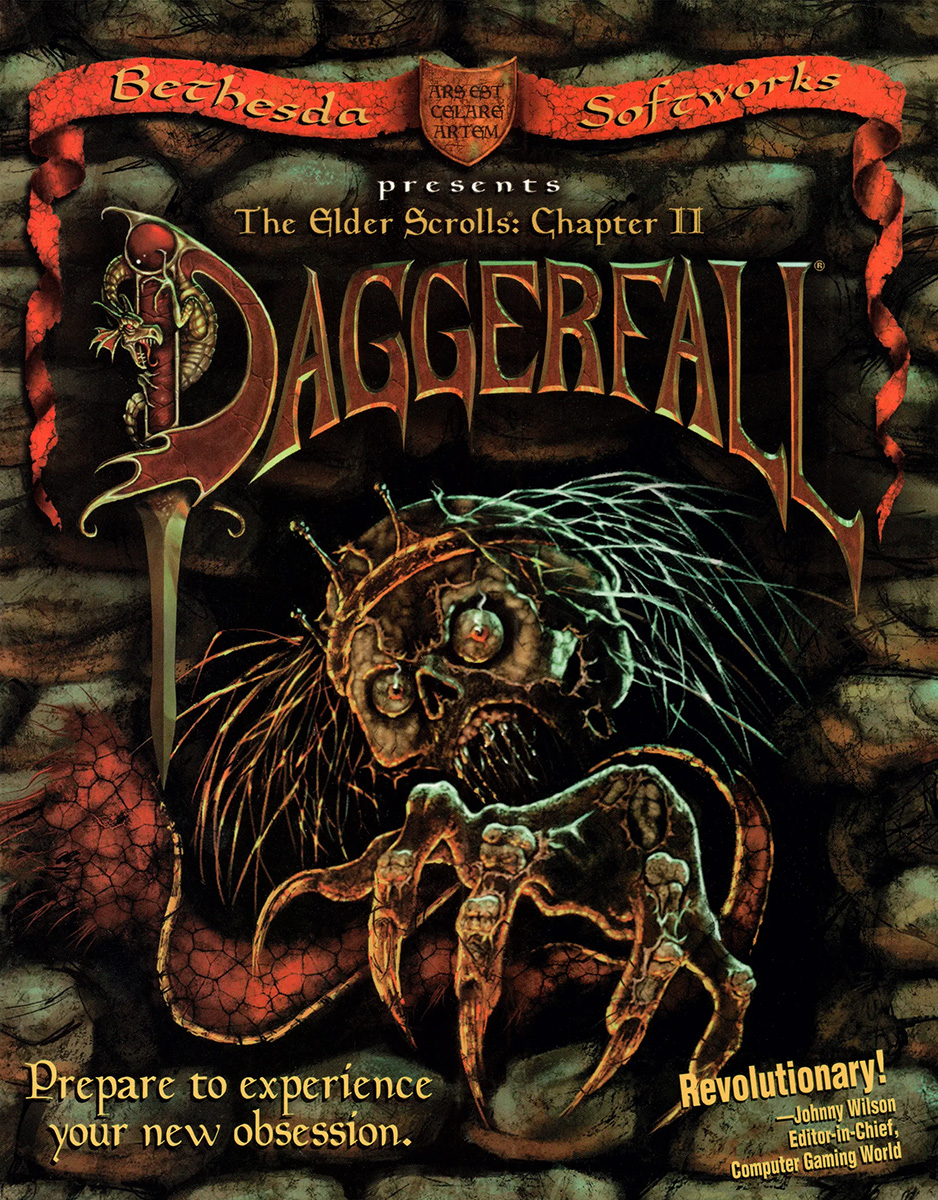
If Oblivion is a generic fantasy experience, then The Elder Scrolls II: Daggerfall is anything but generic. Daggerfall is a political thriller through-and-through that happens to take place in a fantasy world. Personally, I like political thrillers. Everyone has their own agenda, and you're just a pawn in a complicated six-player chess game. Daggerfall is an older RPG that may be hard to get into, especially if you're not a fan of the dice roll system, but it's a great experience if you can get past how different RPGs back then were compared to modern titles (it's certainly not Skyrim).
The biggest thing that makes Daggerfall stand out among the rest of the Elder Scrolls games is that a large amount of the missions are time-gated. You get fairly lenient time-gates, of course, but this game isn't the "Accept a quest and forget about it until you've completed 500 hours" type of game. If you take too long to complete a mission, or if you just reject the mission completely, then you're out of luck. The main quest isn't necessarily locked, but that specific branch is.
Yes, that "branch." The main story of Daggerfall is a series of flowcharts that interact with each other in weird ways, and you only need to complete a few threads to "beat" the game. If you follow the Daggerfall flowchart on the Unofficiel Elder Scrolls Pages (UESP), you could complete the game in possibly a third of the flow-chart.
Daggerfall does a great job at "subtle" storytelling. Most of the game takes place during dungeon crawls and the story is drip-fed to you between these dungeon crawls. To get the most out of this game, you need to be willing to accept information given to you and critically think through how much of it is true and where the source's bias may lay. If you can play with dice rolls systems of old, I'd rush to recommend this game. There are plenty of guides online for min-maxed Daggerfall builds.
3. The Elder Scrolls V: Skyrim
Lorem ipsum dolar sit amet
4. The Elder Scrolls III: Morrowind
Lorem ipsum dolar sit amet
5. The Elder Scrolls Online
Lorem ipsum dolar sit amet
Honorable Mentions
Lorem ipsum dolar sit amet
Unplayed Games
Lorem ipsum dolar sit amet